Creators of Fintoch crypto project were accused of stealing $31.6 million from clients

The Fintoch project team has withdrawn its assets and announced. That due to the transition to the new network in the coming days on the platform there may be temporary problems with the deposit or withdrawal of funds

The creators of the crypto project Fintoch stole 31.6 million USDT from customers, on-chain detective ZachXBT reported. The platform’s team withdrew funds to various addresses on Tron and Ethereum networks. Users then began complaining that they couldn’t access their assets.

The Fintoch platform positioned itself as a project of Morgan Stanley, a multinational corporation. And it provided diversified financial services. Also among other things, it offered a 1% daily return on investment. The platform assured that HyBriid’s exclusive blockchain security technology allows users to “enjoy blockchain investments with zero risk.

ZachXBT recalled that Morgan Stanley previously said it had nothing to do with Fintoch. And the Singapore government had warned investors that the project was falsely presented as licensed.

The blockchain analyst also revealed that someone like Bobby Lambert. Who is listed as the CEO on the project’s website, does not actually exist. His role was probably played by actor Mike Provenzano, ZachXBT suggested, attaching a photo.

Also the Fintoch project was widely advertised and held large-scale conferences and other events in various countries. For example in Vietnam, Malaysia, South Korea, UAE and Indonesia (in Bali).

Fintoch page in the Medium social network is now closed. And in the May 24 telegraph channel of the project was published an announcement of the upcoming launch of the public network FTC. According to the announcement, there will be a “migration and deployment of system data” in the coming days.

Our experts warn that it is necessary to check each project very carefully. And if there is news that the company is cheating somewhere, it should be the first signal to withdraw your money from such a project.

Read More

Hong Kong will open retail sales of cryptocurrency, what it means for the whole cryptocurrency world

Our experts talked about the influence of news from Hong Kong on the digital asset industry. And how leading cryptocurrency exchange prices will react from opening a new cryptohub in Asia

As of June 1, retail investors in Hong Kong will be able to trade cryptocurrencies on licensed platforms. On May 23, Hong Kong’s Securities and Futures Commission (SFC) published a report on regulatory requirements for cryptocurrency trading platforms. These regulations will go into effect at the beginning of the summer.

The regulator collected comments from market participants before publishing the document. It received 152 responses, including from Binance, Coinbase, Huobi, OKX, Kaiko, Matrixport, Ripple Labs, PricewaterhouseCoopers and many others. The rules were developed in response to comments received. Any of the licensed trading platforms that will comply with them. It will be able to officially provide services in the region.

According to the document, as the regulatory mechanisms for stablecoins are scheduled to be implemented only by 2024. That is until these assets will be allowed by the commission in retail. And tokens available to retail investors must meet certain criteria. At a minimum, they must be included in two indexes from unrelated companies. Cryptocurrencies such as Bitcoin (BTC), Ethereum (ETH), Litecoin (LTC), Bitcoin Cash (BCH) meet this criterion. As well as Polkadot (DOT), Solana (SOL), Cardano (ADA), Avalanche (AVAX), Polygon (MATIC) and Chainlink (LINK).

According to the new rules, exchanges advertising specific cryptocurrencies are banned. As well as products that offer yield, staking and lending.

“Ultimately, the primary activity of a licensed trading platform is to act as an agent. And providing the ability to match orders between clients. Any other activity could lead to a potential conflict of interest. And requires additional safeguards,” the document states.

The platform operator is required to keep 98% of customer assets in a cold wallet. But for rare cases, for which a separate authorization from the SFC will be required.

Perspectives for the Asian region

The adoption of comfortable cryptocurrency legislation in Hong Kong will definitely be perceived positively by the market, our experts believe. The past few months have been marred by pressure on the industry in the United States. And because of that, many companies were forced to leave the region.

Also, prospects for cryptocurrency legislation in the EU are still unclear. And the recently adopted MiCA rules are not so transparent and do not fully reflect all the complexities. Crypto industry participants may face if they bet on the European Union.

Over the next few years, China will have an opportunity to regain some of the market lost after the ban on mining and cryptocurrencies. Access to digital assets through Hong Kong will increase capital allocation. And it will provide legal entry to the market for serious investors from one of the largest economic centers in the world.

Hong Kong’s goal is to become a major player in a region where the adoption of cryptocurrencies in countries such as Malaysia, Vietnam, Singapore And many others, at a pace outpacing the rest of the world. Our experts do not rule out the possibility that investors from mainland China will use this jurisdiction. And this will cause a new surge in investment and capitalization growth in the crypto industry. Which has been suffering from a lack of Chinese investors, who are not allowed to work with cryptocurrency, for several years now.

Positive effect on cryptocurrency market in general will be long-term

Creation of a new region with sufficient crypto-regulation. And that will allow new participants to enter the crypto industry officially. All this could be a positive factor for the cryptocurrency market in the second half of 2023, our experts believe.

Also, special attention could be paid to cryptocurrency exchanges tokens. And especially local ones, such as OKX. As they will be some of the projects that will benefit from licenses and new users coming in.

At the same time, the ban on staking, lending and other schemes for making money from crypto exchanges may make it more difficult for them to operate in the Hong Kong jurisdiction.

The news itself has more of a long-term positive effect, but in the moment, the market will have almost no reaction to the new rules. Short-term increase in volatility within standard market fluctuations of 5-10% is also possible.

The renewed approaches can potentially benefit large serious projects with a good reputation like Bitcoin, Ethereum, Tron and the like.

Just as Bitcoin and Ethereum as market leaders in terms of capitalization will be indirectly in demand. and that will lead to an increase in prices across the whole cryptocurrency market.

 

Read More

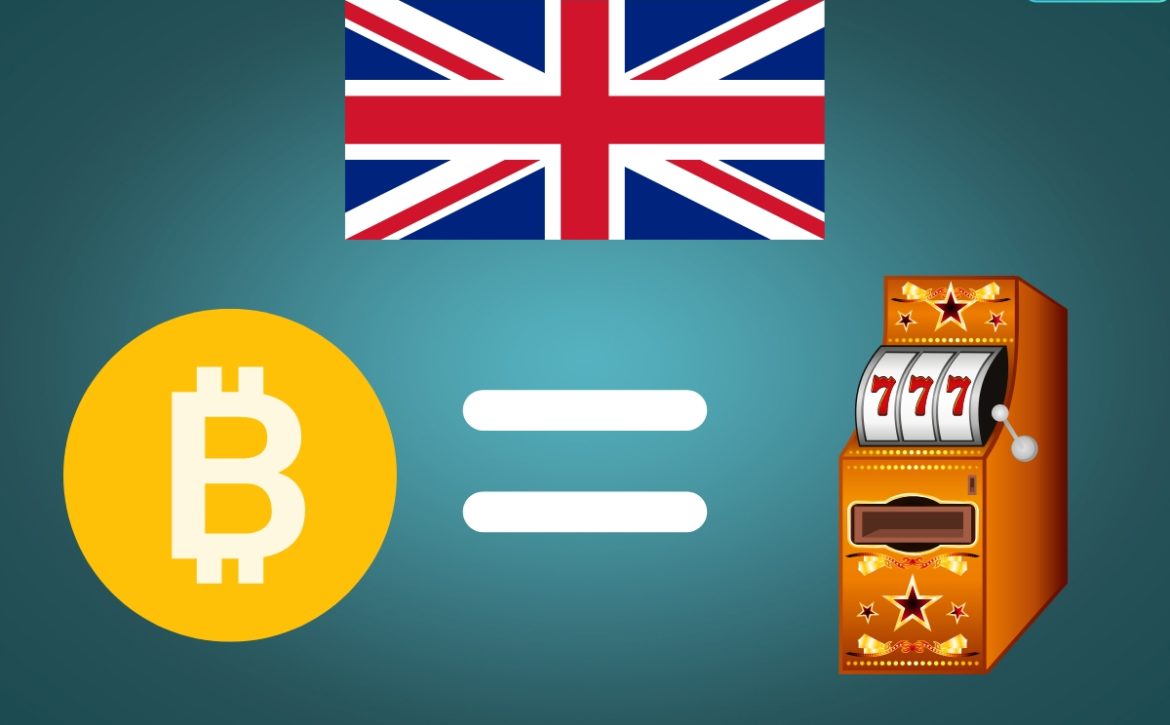
British parliament calls to equate cryptocurrencies with gambling

Regulation of both ordinary financial services of trading and investing in cryptocurrencies will create a false sense of security among depositors, officials say

The U.K. House of Commons Treasury Committee argues that investing in “unsecured” cryptocurrencies like Bitcoin and Ethereum should be equated with gambling. Regulating the industry without such an approach could create an illusion of safety for investors in crypto-assets. That’s according to a committee report released May 17.

The House of Commons Treasury Committee is charged with examining Treasury spending, administration and policy. With all of its agencies and related bodies, including the Internal Revenue Service, Customs, the Bank of England.And the Financial Conduct Authority, the Royal Mint, and other government agencies. And the Financial Conduct Authority, the Royal Mint, and other government agencies.

Late last October, members of the U.K.’s lower house of parliament voted to recognize cryptocurrencies as regulated financial instruments. In their opinion, cryptocurrencies should be considered another type of financial assets, rather than a separate category.

The committee criticized this position in its report, saying that the government should take a different approach to regulating cryptocurrencies. To better protect consumers from losses due to the increased volatility of “unsecured assets,” such as Bitcoin and Ethereum.

Characteristics of cryptocurrency are more reminiscent of gambling than financial services.

Which is also supported by data on their consumer behavior, the report’s authors say. They argue that regulating trading and investing in crypto-assets as regular financial services would lead depositors to believe that the investments are safe, when in fact they are not.

In addition, the committee recommends that the government take a balanced approach to investing in cryptotechnology. And avoid spending public funds to support cryptocurrencies without a clear and profitable application scenario. It is not the government’s job to promote specific innovations for their own sake, the report warns.

Our experts point out that last year, the kingdom’s government set itself the goal of increasing London’s global competitiveness in the financial sector. And that includes the cryptocurrency industry. The U.K. is in the process of developing regulations for crypto-assets. According to the Ministry of Finance, they are aimed at realizing the government’s “ambitions. Which intends to make the country a leader in the cryptocurrency industry.


Read More

Trading volume of 15 largest crypto-exchanges increased by more than 40% for the quarter

Trading volume were boosted by trend events, such as the rise of “Chinese” coins. And also etherium Arbitrum, led to an increase in cryptocurrency trading activity

In the first quarter of 2023, the total trading volume of the 15 largest exchanges reached $10.8 trillion, with an increase of more than 40% compared to the fourth quarter of 2022. This is stated in the report of the analytical platform TokenInsight.

Changes in trading volume and market share of exchanges. These are parameters that directly indicate the rise or fall of the crypto industry. Bitcoin’s price recovery in the first quarter of the year was the most important factor. Which caused an active increase in trading volume.

Binance still holds the largest market share with 55% of trading volume. This is despite a slight decline in its share – it was 60% in the fourth quarter of 2022. OKX and Bybit, as at the end of last year, occupy the second and third places, respectively.

Spot trading volume on the top ten exchanges totaled $2.4 trillion between January and March, up 16% from the previous period. Derivatives trading volume on the top 10 exchanges totaled $7.8 trillion, up 30%.

In addition to the rise in the price of Bitcoin, many trending events occurred in the first quarter. For example, the growth of “Chinese” coins and the Arbitrum Airdrop (ARB). This led to increased activity in derivatives trading, according to our experts.

Binance, OKX and Bybit exchanges collectively accounted for 85% of the cryptocurrency derivatives market in the first quarter of this year.

The report also noted that most native crypto exchanges’ tokens closed the first quarter with an increase in price. Only LEO Token (LEO) from Bitfinex and HT from Huobi fell in price.

The only exchange token that outperformed Bitcoin and Ethereum in growth was BGB (Bitget exchange). And it was up 120%. The token Gate (GT) of the exchange Gate.io and OKB (OKB) from OKX rose in price by more than 50%.

In addition, our experts note that in early April it became known. That the monthly trading volume on decentralized exchanges renewed the maximum since May 2022. Rapid growth of cryptocurrency trading on DEX platforms began in March amid the bankruptcies of U.S. banks.

Read More

Hong Kong regulator to clarify rules for banks to open accounts for crypto firms

The Hong Kong Monetary Authority (HKMA) will issue a circular to banks to clarify account opening rules for cryptocurrency companies.

The Hong Kong regulator will explain how banks should conduct customer due diligence (CDD). The announcement was made by HKMA Deputy Executive Director Arthur Yuen.

Although the Hong Kong authorities actively support the development of the crypto-business. Then this industry is experiencing difficulties with access to banking services. But it is necessary for companies to store fiat assets, pay staff and pay suppliers.

The authority reviewed reports from industry participants that there may be difficulties with the account opening process and banks may reject applications. The HKMA then decided to explain to banks the rules for vetting customers. The regulator expects that crypto-service providers will be able to successfully open accounts using simple procedures.

The HKMA actively discussed the issue with banks and reminded them that there are no legal requirements. That prohibit Hong Kong banks from providing services to virtual asset (VA) related entities. The department also advised banks to avoid unnecessary processes. And refrain from adopting a “one-size-fits-all” approach to rejecting account applications.

On April 28, the HKMA and the Hong Kong Securities and Futures Commission (SFC) will co-host a roundtable discussion for the banking industry and crypto-service providers. This is done to exchange views on account opening and other information.

Our experts note that as of June 1, a new regime will come into effect in the region. According to which all cryptocurrencies operating in Hong Kong or with local investors must obtain an SFC license. Many major crypto exchanges, such as Huobi, OKX and Bitget, have already applied for a license. Or have announced the establishment of a local licensed unit.

Read More

Hacker who stole $160 million decided to make money on them by adding them to liquidity on DEX Curve

Curve protocol developers say that no one can forbid anyone to make deposits. And the platform code is unchangeable

A cryptocurrency hacker has become the leader among liquidity providers in Curve Finance’s DeFi-platform pool. In doing so, using the $160 million he stole from the Wintermute protocol.

Wintermute is a major cryptocurrency market maker, providing liquidity to more than 50 crypto platforms. Such as Binance, Kraken, Coinbase and many others were attacked in September 2022. Ninety different digital assets totaling about $160 million were withdrawn from the protocol.

The attacker placed the stolen funds in the Curve Finance trading pool. These assets now represent 28% of the roughly $400 million placed in Curve’s decentralized liquidity pool, Curve 3pool.

Curve is the largest decentralized crypto exchange (DEX) deployed on the Ethereum network. According to DeFiLlama, its Total Value Locked (TVL) is about $4.5 billion.

Also Curve allows users to trade digital assets without intermediaries. They trade tokens through liquidity pools. Another part of the users provides this liquidity, for which they are charged a commission.

The liquidity providers get a small commission every time someone uses the pool to exchange tokens. The Curve 3pool platform is focused on exchanging stablecoins Tether (USDT), USD Coin (USDC) and Dai (DAI).

Because the code of Curve protocol cannot be changed after its deployment in the Ethereum blockchain. Its creators have no control over who uses the protocol or provides liquidity in the pools.

Our experts point out that even the managers of the protocol cannot change the code where the funds are stored. DEX exchange officials also noted that it is impossible to disable protocol without completely shutting down the Ethereum blockchain.

Read More

Cryptocurrencies lose anonymity, more and more exchanges require KYC

KYC on cryptocurrency exchanges is becoming a trend. But there are still ways to use cryptocurrencies while maintaining privacy and relative anonymity

Cryptocurrency exchange Bybit announced that by May 8, all of its customers will have to pass KYC in order to use any of the platform’s products and services. For the minimum level of verification, users will need to provide identification documents. Also pass identification by photo. The exchange is one of the top 5 largest crypto trading platforms. And before that, it did not impose restrictions, allowing to use the services relatively anonymous.

Governments and regulators around the world are systematically tightening anti-money laundering (AML) compliance requirements for cryptocurrency. Wallet operators and cryptocurrency exchanges are forced to take steps to comply with ever-changing regulations.

Most often, when talking about regulation, the U.S. is mentioned. But the trend toward stricter requirements is not only there, our experts say. The Global Financial Action Task Force (FATF) has been talking about the need to curb the use of cryptocurrencies for money laundering for years. In this case, any crypto-exchange, even if it is not registered in the U.S.. And does not formally work with U.S. users, is at risk if it does not comply with U.S. regulators.

Anonymity and privacy are a thing of the past ?

Non-big crypto exchanges have the ability to adhere to a more flexible KYC/AML policy. But at some point this issue is likely to affect them as well. Therefore, truly anonymous channels for converting cryptocurrencies into fiat money are likely to be gone soon.

Our experts point out that we can already say that there are no more. Because both the bank and CEX see the transaction activity on the bank card. And if it belongs to the person making the transaction, all his activity is already available for viewing.

Small transactions with cryptocurrencies traditionally took place in online exchanges and not on cryptocurrency exchanges. Large p2p services are also seeing a strong tightening of anti-money laundering requirements.

There are OTC (over the counter) exchanges – analog of p2p for large investors. Here coins are sold by big lots. But our experts believe that in the next year or two platforms with low AML and KYC requirements will be forced to at least tighten the requirements. Cryptocurrency has become too visible to leave such freedom for it. Considering that all areas of human life are being totally tightened.

For a really large number of users, privacy as the original ideology and value of cryptocurrency is important. Both in the meaning of “anonymity” and in the context of control over their funds. And the ability to dispose of them as they see fit. Such possibilities still remain, thanks to small CEXs, decentralized exchanges (DEX), private exchanges and OTC services, including those with cash.

This is an advantage of such services, but there are also risks. Because the responsibility and check the reliability of services lies on the user himself. Under these conditions, many users will choose not to be anonymous for the sake of convenience and security. But there will always be choices for those for whom privacy is more important.


Read More

The collapse of FTX was the catalyst for a new bullish cycle of cryptocurrencies

The collapse of a major crypto exchange FTX cleared the market of “toxic leverage” and showed investors the importance of self-storage of digital assets

Analysts at investment firm Bernstein believe that the collapse of FTX was the catalyst for a new bullish cycle in cryptocurrency markets, CoinDesk reported, citing a report from their company. The collapse of a major crypto exchange cleared the market of “toxic leverage.” And showed crypto investors the importance of decentralization and self-storage of digital assets.

Macroeconomic factors are supporting Bitcoin. Such as the weakness of regional U.S. banks and the continued outflow of deposits to money market funds. And the “big four” U.S. banks (Bank of America, Citigroup, Wells Fargo and JPMorgan Chase) reflect investor concerns about the “centralization of money,” according to Bernstein.

“Any potential shocks, in the credit sector or from the government <…> make Bitcoin an ideal safe haven asset alongside gold,” the analysts wrote.

Since the beginning of the year Bitcoin’s rate grew more than 80% – from $16.5 thousand to $29.8 thousand only in March on the background of bankruptcies of American banks (Silvergate Bank, Silicon Valley Bank (SVB) and Signature Bank) price of the first cryptocurrency grew from $23 thousand to $28 thousand.

Bernstein’s experts also pointed out that fees on the Ethereum network tripled after the FTX collapse. Which reflects the growth of user activity and interest in the asset itself. Ethereum has risen 75% since the beginning of the year, from $1,200 to $2,100.

Our experts note that at the end of March, analysts Bernstein noted that now there are “ideal conditions” for the growth of the crypto market. Problems in the U.S. banking sector could lead to a decentralized financial system as an alternative to traditional banks.

Read More